

The Anatomy of a High-Impact Executive Interview Video (And Why Most Fail)
Executive interview videos have become one of the most effective tools for modern brand communication, yet many fail to deliver meaningful impact. The issue is rarely the executive themselves. More often, failure stems from poor structure, inadequate preparation, and production decisions that distract rather than support the message. A high-impact executive interview video is not accidental. It is the result of intentional design, strategic planning, and disciplined execution.
At the core of every successful interview video is clarity of purpose. Without a clear objective, interviews become unfocused conversations that lack narrative direction. Viewers may hear competent answers, but they leave without understanding what the leader stands for or why the organization matters. High-impact interviews begin by defining the message before a single frame is captured. This ensures that every question, visual choice, and edit serves a specific communicative goal.
One of the most common mistakes in executive interview videos is relying on improvisation without guidance. While authenticity is essential, authenticity does not mean unstructured dialogue.
Executives perform best when they are supported by well-designed questions that guide the conversation while allowing natural responses. Strategic question design creates a narrative arc, moving from context to insight, and from insight to vision. This structure keeps the viewer engaged and ensures the interview delivers value rather than vague commentary.
Environment - How it affects your audience
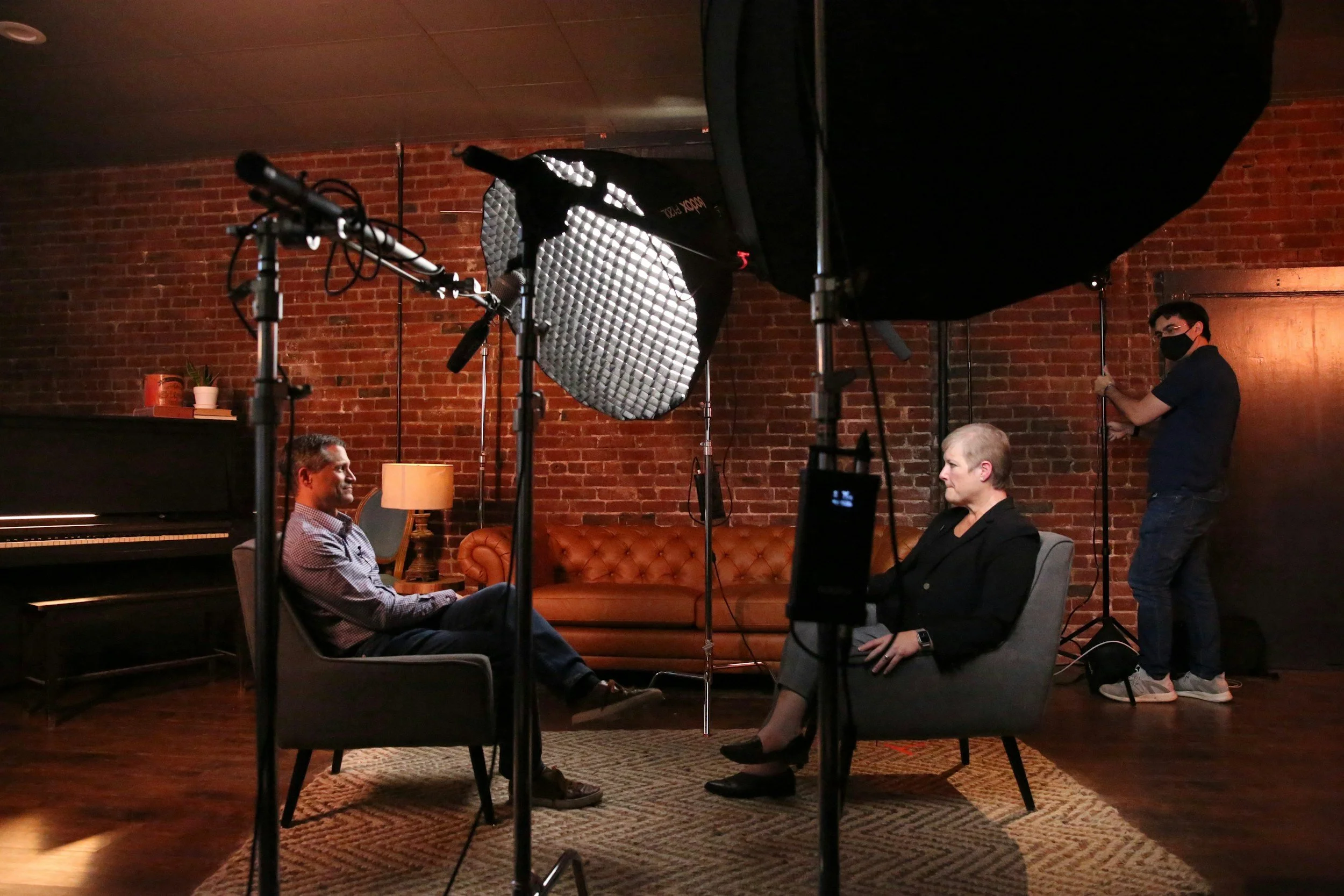
Visual environment is another critical component often overlooked. Backgrounds communicate meaning before a word is spoken. A cluttered or poorly chosen setting distracts from the executive and weakens perceived professionalism. High-impact interviews are filmed in environments that reinforce credibility and context. Whether in a refined office, on-site at a project, or within a controlled studio space, the environment should complement the message and reflect the organization’s standards.
Lighting plays a decisive role in how executives are perceived on camera. Flat or poorly balanced lighting can make even the most confident speaker appear tired or disengaged. Thoughtful lighting design shapes the face, creates depth, and conveys warmth without exaggeration. In executive interview videos, lighting is not aesthetic decoration; it is a trust-building tool. Proper lighting reinforces authority and ensures the audience focuses on the message rather than visual distractions.
Audio quality is equally essential and frequently underestimated. Viewers will tolerate imperfect visuals far longer than unclear sound. Poor audio immediately signals amateurism and reduces credibility. High-impact interviews prioritize clean, consistent audio capture, ensuring every word is clear and free from distraction. When audio is properly managed, viewers can engage fully with the content without effort or frustration.

Framing and composition subtly influence how authority is communicated. Camera angles that are too wide create emotional distance, while angles that are too tight can feel invasive.
Professional interview framing strikes a balance that feels conversational yet composed.
Eye line, headroom, and body positioning are all considered to create a sense of confidence and approachability. These choices may seem minor, but collectively they shape audience perception.
It’s Not Just About the Composition - It’s About Timing Too
Another frequent failure point is pacing. Interview videos that lack rhythm feel long, even when they are short. High-impact interviews are paced intentionally, allowing space for thoughtful answers while maintaining momentum. Editing refines the conversation without stripping it of authenticity. Pauses, emphasis, and transitions are preserved where they add meaning and removed where they distract. The goal is not to manufacture energy, but to sustain engagement.
A successful executive interview also requires narrative flow. Even in a single-camera format, the interview should feel like a story rather than a series of disconnected responses. A strong opening establishes relevance and draws viewers in. The middle of the interview deepens understanding through insight and perspective. The conclusion leaves the audience with a clear takeaway, whether it is vision, confidence, or clarity about the organization’s direction.

Many interview videos fail because they attempt to replicate advertising techniques rather than embracing conversation.
Executives are not actors, and interviews are not commercials.
High-impact interview videos respect this distinction by focusing on substance rather than spectacle. Visual refinement supports the message, but it never competes with it. The executive remains the focal point, and the conversation remains the priority.
Planning for content longevity is another hallmark of effective interview production. A well-executed interview is not a single-use asset. High-impact interviews are designed with repurposing in mind, allowing segments to be extracted for social platforms, internal communications, or future campaigns. This approach maximizes return on time and investment while maintaining consistency in leadership messaging.
How We Do it at Bridlepath Photography
At Bridlepath, executive interview videos are built through a deliberate, methodical process. Each phase, from pre-production to final delivery, is guided by the same principle: clarity builds trust. The interview is shaped to reflect leadership values, organizational tone, and audience expectations. Every technical decision serves the broader goal of communication, not visual excess.
As executive visibility becomes increasingly important, the difference between a mediocre interview and a high-impact one will continue to matter. Audiences can immediately sense when a video has been thoughtfully produced versus casually assembled. High-impact executive interview videos convey professionalism, confidence, and intentionality. They show that leadership takes communication seriously and respects the audience’s attention.
Ultimately, the anatomy of a high-impact executive interview video is defined by alignment. Message, environment, production, and delivery must work together seamlessly. When they do, the result is not just a video, but a powerful leadership asset that communicates trust, vision, and authority long after the recording ends.
Jan 10, 2026