

Empty rooms often look fine in person, but they frequently underperform online—and that mismatch confuses sellers and agents. “It’s a big room, why doesn’t it feel big in the photos?” The answer is psychology. Buyers aren’t evaluating your listing like an architect. They’re scrolling fast, comparing quickly, and trying to understand a space with minimal mental effort. When a room is empty, the brain has to work harder to interpret it, and most people don’t do extra work while scrolling.
They just move on.
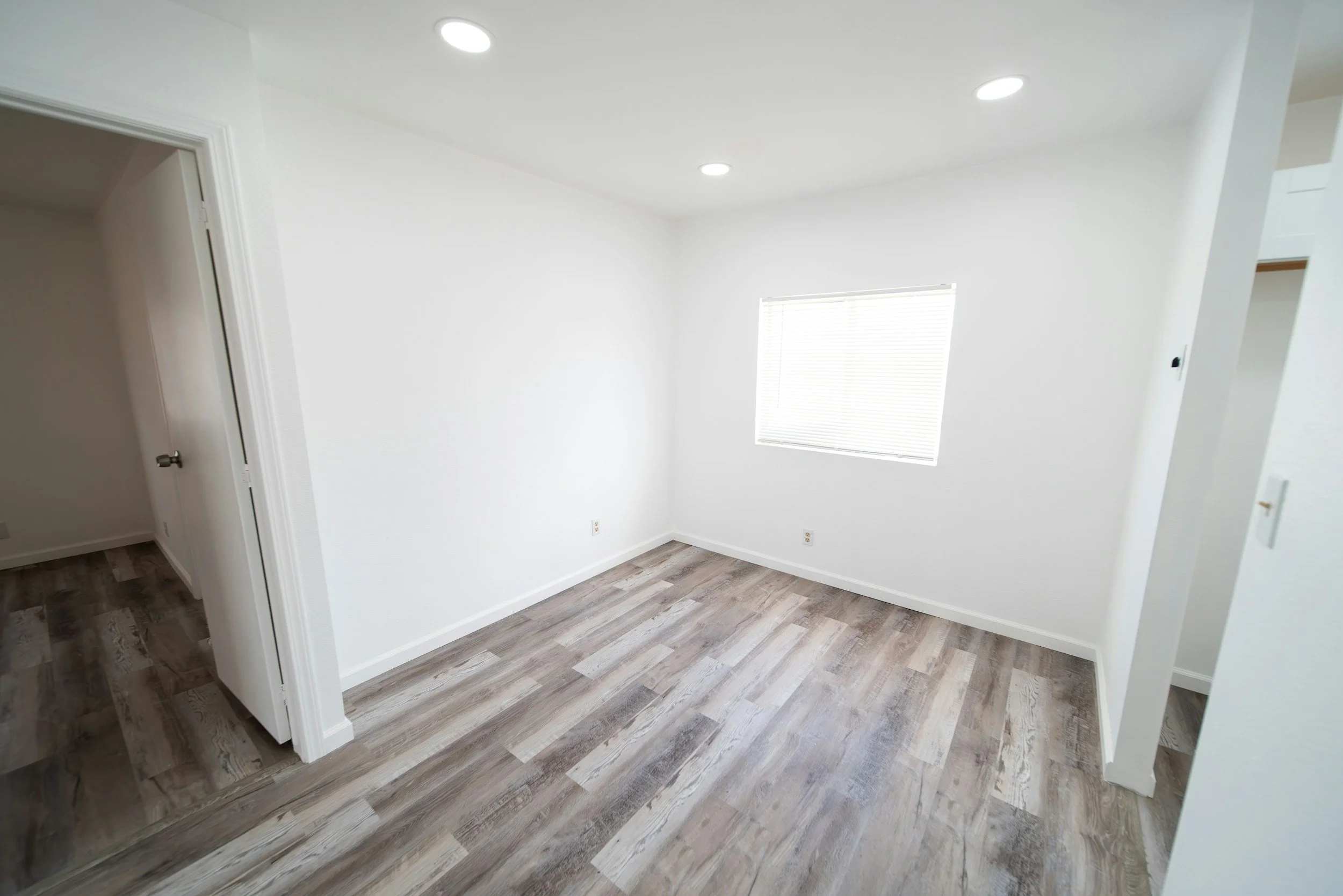
Online, buyers aren’t only asking “Is it nice?” They’re asking “Can I understand it instantly?” An empty room removes the cues that make a space legible. Without furniture, it becomes harder to judge scale, function, and flow. A 14-foot wall can look like 10 feet. A large living room can feel awkward and undefined. A wide-open basement can read like a cold box instead of a flexible asset. The buyer doesn’t necessarily think “this is smaller than I expected”—they just feel uncertain, and uncertainty kills showings.
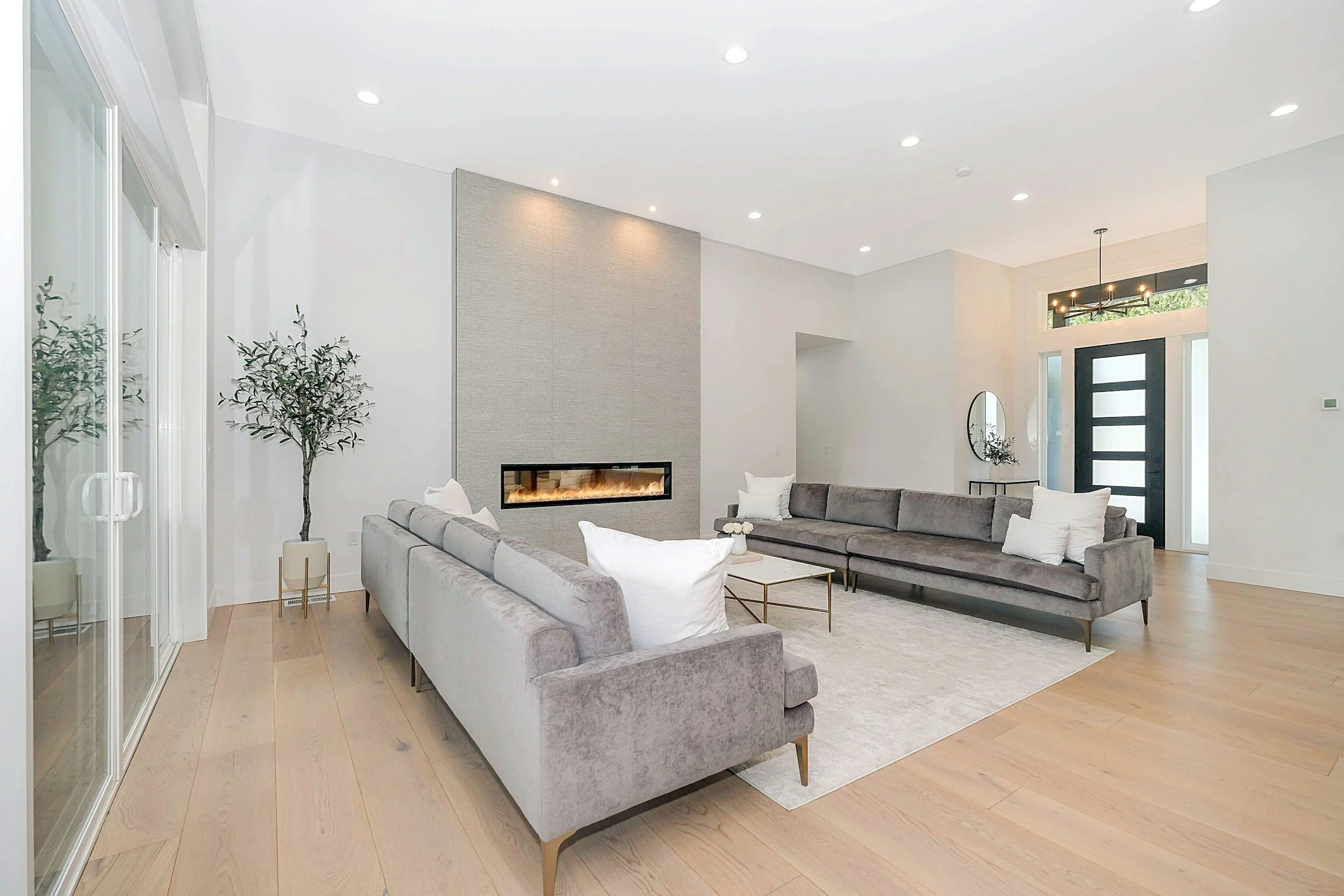
This is where scroll behavior matters. Most buyers make micro-decisions in fractions of a second: pause or keep moving, click or skip, save or forget. They’re not studying. They’re pattern-matching. Furnished rooms provide patterns the brain recognizes instantly—sofa, coffee table, dining table, bed—meaning the viewer immediately understands purpose and scale. Empty rooms don’t provide those patterns. The brain has to build a mental model from scratch, and that mental effort is what psychologists call cognitive load. Higher cognitive load means lower conversion.
The biggest conversion problem in empty rooms is the absence of scale cues. A couch tells you how deep the room is. A bed tells you whether a bedroom is actually usable. A dining table tells you how many people can comfortably sit. Without those anchors, buyers guess—and when people guess, they usually guess conservatively. They assume it’s smaller, tighter, or less functional than it might be. Even worse, they sometimes assume something is missing for a reason: “Why is this room empty?” “Is it awkward?” “Does nothing fit?” Those doubts are quiet, but they’re powerful.
Empty rooms also create a function problem.
Many spaces aren’t self-explanatory when they’re vacant—bonus rooms, front living rooms, long great rooms, open concept zones, basement areas. In person, you can walk through and get it. Online, a buyer needs the room’s purpose to be obvious instantly. If it isn’t, they may not book a showing because the listing doesn’t feel “resolved.” People want a home that makes sense without effort.
This is exactly why staging—physical or virtual—works when it’s done responsibly. Staging doesn’t just “decorate.” It reduces cognitive load by doing the interpretation work for the buyer. It provides scale cues, establishes function, and shows a believable layout. In other words, staging turns “blank space” into “this is where the couch goes,” “this is how the dining area fits,” “this is what you could do with the basement.” That clarity turns uncertainty into confidence, and confidence is what converts into showings.
Virtual staging, in particular, can be a practical solution when a home is vacant or an area is unfinished. The ethical standard matters: disclose that it’s virtually staged, keep it realistic, and use it where it’s most helpful—empty rooms, awkward spaces, and unfinished basements. The goal isn’t to create fantasy. It’s to provide a model the buyer can imagine themselves living in. When it’s tasteful and believable, virtual staging can make a listing feel warmer, more premium, and easier to understand—without changing the reality of the home.
Photography technique also plays a role. Empty rooms need stronger composition than furnished rooms because there’s less visual structure. Clean verticals, correct perspective, intentional angles, and consistent lighting help, but they can’t replace the missing “reference objects” that staging provides. Editorial-style images and detail shots can add emotion, but the conversion lever is still clarity—buyers need to understand the room quickly.
The bottom line is that empty rooms don’t convert online because they demand too much mental effort from the viewer at the exact moment the viewer is least willing to spend effort. Staging reduces that effort. It gives buyers scale cues, function cues, and instant comprehension—so they stop scrolling, start imagining, and book the showing.
If you’re listing a vacant home or a property with empty or unfinished spaces, the question isn’t “Should we stage?” It’s “Are we making this home easy to understand online?” When you reduce cognitive load, you increase conversion. And that’s what sells homes faster.