

How 3D Scanning and Digital Twins Solve GTA AEC Challenges in Design, Construction & Facility Management
AEC (Architecture, Engineering, and Construction) professionals in the Greater Toronto Area face familiar challenges at every project stage – from capturing existing conditions and coordinating complex builds to handing over accurate documentation. Bridlepath Photography’s Matterport-based 3D scanning and digital twin services directly tackle these pain points. By providing precise virtual replicas of job sites, Bridlepath helps GTA firms save time, reduce errors, and improve collaboration from design through construction to facility management. In fact, a recent survey found 90% of Canadian construction leaders agree that adopting digital tools like BIM and digital twins boosts efficiency. Below, we break down how Bridlepath’s 3D digital twins benefit each phase of a project, with local insights and data to illustrate the impact.
Design Phase: Accurate Existing Conditions & BIM-Ready Models
Capturing existing site conditions is a critical – yet often troublesome – first step in design. Many GTA projects involve renovations or expansions of older buildings whose blueprints may be outdated or missing. Traditionally, architects and engineers rely on manual site surveys and measurements, which are time-consuming and prone to human error.

Industry research shows over 52% of project rework stems from poor data or miscommunication like inaccurate drawings. Even a small measurement mistake in a Toronto heritage building could cascade into costly design changes down the line.Matterport 3D scanning offers a better way. Bridlepath Photography uses Matterport Pro series cameras to quickly capture a highly detailed digital twin of your space. In a matter of hours, we can scan an entire facility – far faster than weeks of manual measuring. The resulting immersive 3D model is not just a marketing tour; it’s a dimensionally accurate record of the as-built environment. Every wall, window, pipe, and beam is documented with millimeter precision, eliminating guesswork. As one engineering firm noted, reality capture ensures “every measurement is accurate from the outset, drastically reducing project errors and unforeseen complications.”
BIM Integration is seamless. The rich spatial data from a Matterport scan can be converted into BIM/CAD-ready files, providing designers a head-start on modeling. Toronto’s own HH Angus, a leading engineering consultancy, embraced Matterport to generate Revit-ready models for a hospital project – cutting down on tedious drafting. By using Matterport digital twins to kick off their design in Revit, HH Angus reduced site survey costs by 50% and avoided numerous repeat site visits. “Matterport enables us to document as-built conditions, validate models, and design faster than ever before,” says Melissa Parry, BIM Specialist at HH Angus. In practical terms, having an exact 3D capture of a building means architects can immediately spot constraints or conflicts and perform clash detection within the BIM environment. (It’s no surprise 95% of surveyed BIM users reported that better coordination/clash detection from digital models had a major impact on their projects. By starting design with a trusted digital twin, AEC teams in the GTA can avoid surprises later, saving time and money through fewer change orders and less rework.
Key benefits in design phase:
Precise As-Built Capture: High-fidelity scans eliminate the errors of manual measurements, so design plans are based on reality from day one. This accuracy is especially valuable when renovating older Toronto structures with no reliable drawings.
Faster Design Turnaround: What once took weeks of measuring can now be done in hours. Immediate access to a 3D model means design teams start work sooner, compressing the overall project schedule.
BIM-Ready Models: Matterport’s outputs (point clouds, OBJ files, etc.) integrate into Autodesk Revit and other CAD tools. Designers can generate BIM models 70% more cost-effectively than with manual “scan-to-BIM” workflows, enabling a 100% BIM environment without busting budgets.
Construction Phase: Remote Collaboration & Better Coordination
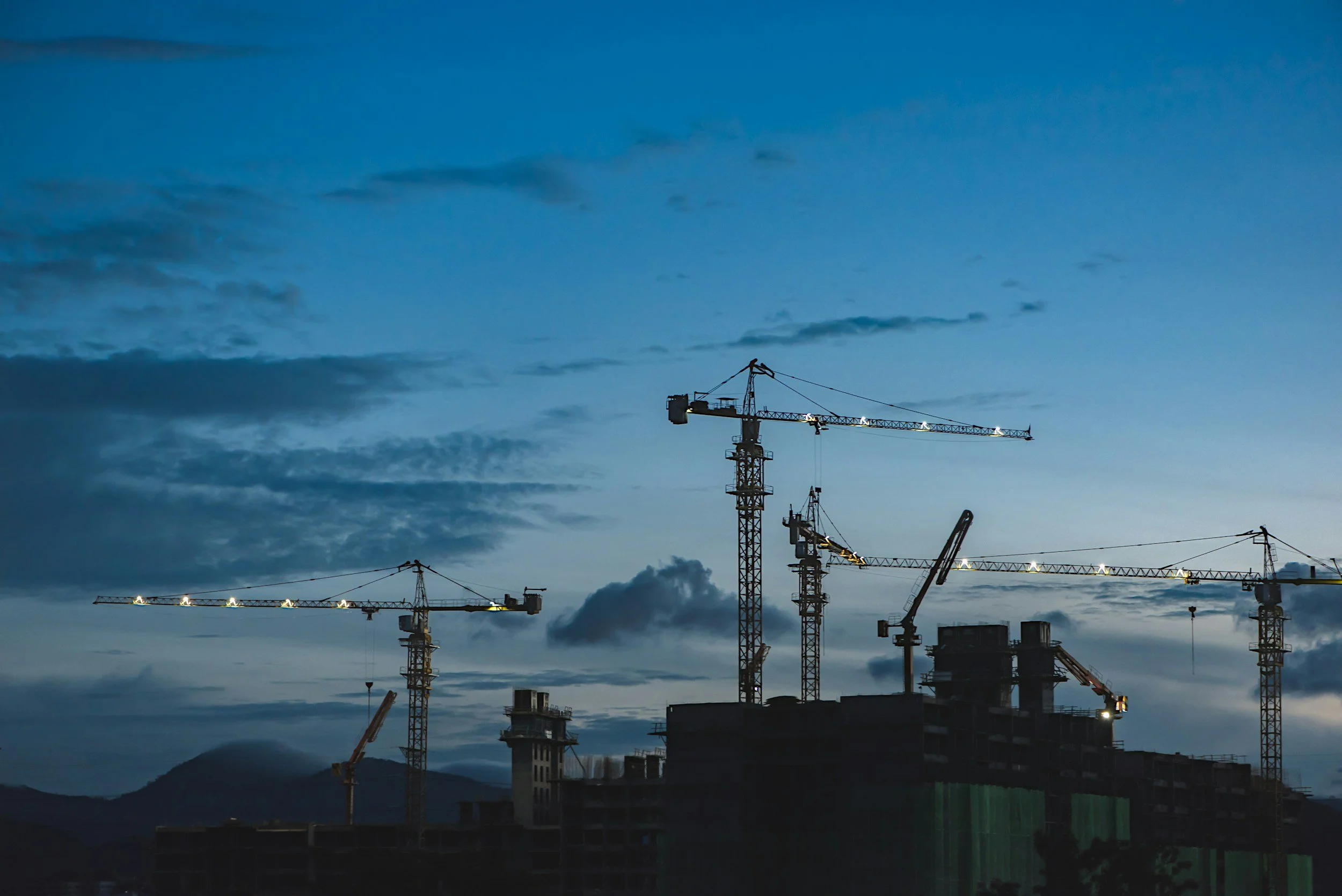
Once construction is underway, keeping everyone on the same page becomes the next challenge. Large GTA construction projects typically involve numerous stakeholders – contractors, subcontractors, consultants, and clients – who all need up-to-date site information.Miscommunication or lack of visibility can lead to costly rework, delays, and safety risks. In fact, Canadian firms using modern BIM processes report 83% reductions in rework and 79% better communication on projects. Bridlepath’s digital twin services extend those benefits to the field by enabling remote collaboration and precise progress tracking.
Virtual site visits are a game-changer for project coordination. Instead of requiring every consultant to physically travel to the job site (battling Toronto traffic or flying in specialists), Bridlepath can scan the construction site at key milestones and share the immersive 3D walkthrough online. Team members can “walk” the site virtually from their office, inspect details, and even take measurements inside the model. Gilbane, a major construction firm, used Matterport digital twins to review 21 different project sites in a single 4-hour online meeting, something that would have normally required 21 separate in-person trips – saving 168 working hours in one session. Overall, Gilbane eliminated over 1,000 hours of travel and site visit time across 300 locations by using digital twins for remote inspections, contributing to a 25–30% savings in project time and cost. Those kinds of efficiency gains resonate in the GTA, where projects often have aggressive timelines and dispersed teams.
Improved trade coordination and oversight is another benefit. A Matterport digital twin becomes a single source of truth for the construction’s current state – accessible to all stakeholders. Everyone from the project manager to subcontractors can see the same up-to-date conditions, which reduces misunderstandings. Issues can be identified visually in the model and annotated with Matterport’s MatterTags or notes. For example, Build Health International integrated Matterport with Autodesk Construction Cloud so that site scans were linked to their issue tracking and BIM coordination workflows, greatly reducing miscommunications that lead to rework. Likewise, clash detections or design adjustments can be validated against the actual site geometry captured in the scans, ensuring that what’s on paper aligns with reality on-site.
Bridlepath’s 3D scans also enhance construction quality control and documentation. By capturing progress scans at various stages (e.g. post-demolition, pre-drywall, post-MEP rough-in), the team creates an ongoing visual record. This helps with coordination – for instance, after framing and rough-in, a scan can reveal if any HVAC duct or conduit ended up installed differently than planned, so corrections can be made before walls are closed. It’s telling that one construction manager said, “existing conditions are a common issue on all projects… with a Matterport digital twin, we can get on the same page with customers to address any challenges revealed”. By the time of final inspection, there are far fewer surprises because stakeholders have been virtually monitoring the build. And if an inspector or client can’t physically attend a walkthrough, the digital twin is the next best thing – during COVID-19, some city inspectors even accepted virtual inspections via Matterport when they couldn’t visit in person. Today, even with sites fully open, many GTA builders continue to use digital twins to expedite approvals and client updates.
Key benefits in construction phase:
Remote Collaboration: Team members and clients can tour the site remotely in 3D, eliminating unnecessary travel. This saves significant time and keeps projects on track (as seen with Gilbane’s hundreds of hours saved through virtual site meetings).
Real-Time Coordination: A digital twin provides a shared, always-current view of the project. By working off one “source of truth” model, architects, engineers, and contractors reduce miscommunications and resolve issues faster.
Reduced Rework & Delays: With accurate visual documentation of site conditions, errors are caught early. Fewer mistakes mean fewer tear-outs – contributing to the 5–15% project cost savings that reduced rework can yield. Schedules become more reliable when fewer do-overs are needed.
Safety & Convenience: Fewer people on-site means lower safety risk and less disruption. Remote stakeholders can inspect hazardous or hard-to-reach areas virtually. Plus, busy executives or clients appreciate being able to check progress from anywhere on their own time.
Facility Management Phase: Comprehensive Handover & Full Lifecycle Support
The end of construction is just the beginning of a building’s life. Owners and facility managers in the GTA are increasingly focused on smooth handover and long-term maintenance of their assets. Unfortunately, traditional handover often involves boxes of paper drawings, O&M manuals, and disjointed data that can be hard to navigate. Important details get lost, and when systems fail or renovations come up years later, the facilities team may be guessing what’s behind a wall or above a ceiling. This is where Bridlepath Photography’s digital twin services truly shine – providing a lasting, accessible digital record of the facility that supports operations and maintenance.
A Matterport digital twin at handover means the owner receives a fully navigable 3D model of the final build. Instead of shuffling through binders, they can virtually walk through the building to inspect asset locations, verify room finishes, or plan changes. Gilbane experienced this benefit firsthand: when they delivered a Matterport digital twin of a bank’s renovated Toronto office floor as a close-out deliverable, the client was “very impressed with the immersive digital replica,” using it to walk through and show the space to stakeholders remotely. For facility management, the value goes beyond visuals – the twin can be enriched with data tags on equipment (showing model numbers, install dates, etc.) and measurements. HH Angus, for example, uses MatterTags in digital twins to annotate MEP equipment and capture data for easy reference within the 3D space. Imagine a building engineer clicking on a boiler in the virtual model to pull up its specs or maintenance history; this level of information accessibility streamlines troubleshooting and upkeep.
Complete lifecycle context is another major advantage. Because Bridlepath can capture multiple stages of construction, the digital twin becomes a time capsule of hidden systems. Facility managers can toggle between the final as-built twin and an earlier rough-in scan to literally see behind the walls – locating pipes, electrical conduits, and structural elements without destructive investigation. Need to add a new sprinkler line in a few years? Simply check the 3D “X-ray” from the rough-in model to find free space and avoid cutting into existing services. This capability can save enormous time, money, and disruption during renovations or maintenance emergencies.
Owners also appreciate the cost and sustainability benefits of having a digital twin for facilities. Considering that around 80% of a building’s total lifecycle cost occurs in the operations phase (maintenance, energy, repairs), optimizing those operations yields big returns. Digital twins enable data-driven facilities management – from monitoring conditions to training staff – which can cut operating costs by up to 35% while also reducing carbon emissions. Additionally, as buildings in Toronto aim for higher sustainability and smart-building standards, a digital twin is the foundation for integrating IoT sensors and predictive maintenance down the road. It’s no wonder that many building owners now request robust digital data at handover instead of paper docs. Delivering a Matterport digital twin gives your client an easily accessible, user-friendly asset that elevates their post-occupancy experience.
Key benefits in facility management phase:
Interactive Digital Documentation: The entire facility is captured in a navigable 3D model, so nothing gets lost in translation. At turnover, owners get a living digital document of the building – far more useful than static as-builts.
Efficient Maintenance & Training: Facility teams can virtually locate shutoff valves, above-ceiling components, or mechanical equipment locations by referencing the twin. New maintenance staff can be onboarded with a virtual tour of the building, learning the layout faster.
Future Renovation Ready: When it’s time for upgrades or expansions, the digital twin serves as an accurate baseline. Planners can integrate it with new design models to ensure additions tie in smoothly (a practice already being used in complex healthcare facility projects).
Lifecycle Cost Savings: Better operational insight and fewer unknowns translate to lower costs. Energy analysis, space planning, and asset management all improve with a data-rich digital twin, helping owners save on utilities and avoid major surprises (contributing to that potential 35% reduction in operating costs long term).
Building a Better Future for GTA AEC – Contact Bridlepath Photography
From the initial design concept to breaking ground and finally to facility handover, Bridlepath Photography’s Matterport 3D scanning services support AEC professionals at every step. We help Greater Toronto Area architects, engineers, and builders capture reality with unrivaled accuracy, collaborate more effectively, and deliver more value to clients. The GTA’s AEC industry is rapidly modernizing – Ontario now leads Canada in adopting BIM and digital twin technology for major projects. Firms that leverage these tools gain a competitive edge in meeting tight schedules, controlling costs, and winning client trust.
Bridlepath Photography is proud to be a local partner in this digital transformation. With nearly a decade of experience in 3D virtual tours and reality capture, we have the expertise to tailor Matterport-based solutions to your project’s needs – whether it’s a downtown Toronto commercial retrofit, a new condo development, or an institutional facility upgrade. Our team handles the entire process, from on-site scanning to delivering BIM-compatible files and interactive 3D models accessible from anywhere. You get quick turnaround and the assurance of accurate, high-quality data to base your decisions on.
Don’t let outdated workflows hold your projects back. Contact Bridlepath Photography today to discuss how our 3D scanning and digital twin services can solve your specific project challenges. Experience the difference of having crystal-clear existing conditions, streamlined construction coordination, and a complete digital handover package on your next build. Together, let’s build a smarter, more efficient future for Toronto’s AEC industry – one digital twin at a time.
(Reach out via our website or call us at 647-295-8252 to get started on a pilot 3D scan or a quote for your project. We’re here to help you leverage the latest technology to save time, cut rework, and deliver exceptional results.)
October 31, 2025